
In recent years, the Cham community in the provinces of Ninh Thuận and Bình Thuận has witnessed a notable debate concerning proposals to recognize “Bani religion” as an independent religion. This issue is not merely administrative or legal in nature; it also reflects deeper misunderstandings regarding religious history, linguistics, and the system of identity classification within the Cham community itself. According to the official classification of religions by the Vietnamese state, Cham people who follow Islam are categorized as Muslims. However, at certain times and in some local administrative contexts, particularly in Ninh Thuận and Bình Thuận, “Bani” has been recorded as a religious category on personal identification documents based on individual declarations. This inconsistency, combined with the lack of terminological standardization, has contributed to and reinforced the mistaken perception that “Bani” is a separate religion. From an academic perspective, this phenomenon highlights the need to distinguish clearly between social terminology, linguistic expressions, and legitimate religious designations. Many terms within the Cham community originate from Arabic but have undergone semantic transformation under the influence of local culture. Without being analyzed within their specific historical and linguistic context, these terms are easily misunderstood or reinterpreted in ways that diverge from their original meaning. |

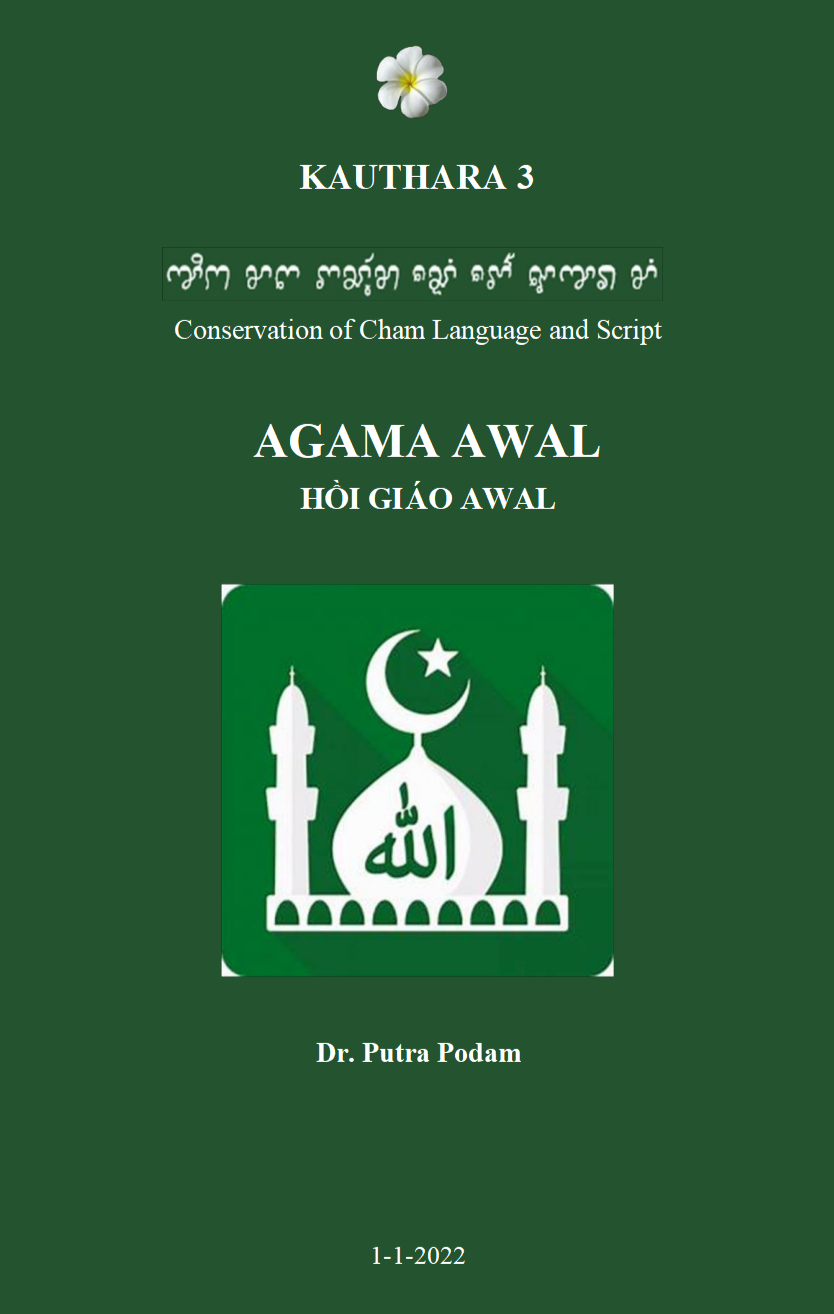
In the course of Champa’s history, Islam was introduced around the 10th century through regional trade networks and cultural exchanges. Over time, and especially from the 16th century onward, Islam in Champa developed significantly and gradually formed distinctive religious structures. Among these, Agama Awal played a central role in the spiritual and social life of the Cham community. Agama Awal can be understood as an early form of Islam in Champa, emerging during a period when the religion, in the process of its adoption, remained closely intertwined with indigenous cultural and belief systems. This phenomenon reflects a broader pattern across Southeast Asia, where imported religions were often adapted to local contexts. Characteristics such as the Acar clerical system, ritual structures, and modes of community organization indicate a stage of Islam that had not yet become fully standardized, rather than the existence of a separate religious system. During its formation, Islam in Champa likely absorbed multiple influences. Early phases show traces resembling Shia Islam, particularly in the prominent role of religious authorities, while from the 16th century onward, the influence of Sunni Islam became increasingly evident. However, these elements should be understood as successive historical layers within Islam itself, rather than as a basis for defining Agama Awal as an independent religious system. |
Trong tiến trình lịch sử của Champa, Hồi giáo (Islam) được tiếp nhận từ khoảng thế kỷ X thông qua các mạng lưới giao thương và giao lưu văn hóa khu vực. Trải qua nhiều biến động, đặc biệt từ sau thế kỷ XVI, Islam tại Champa phát triển mạnh và dần hình thành những cấu trúc tôn giáo mang tính đặc thù, trong đó Agama Awal giữ vai trò quan trọng trong đời sống tinh thần và xã hội của cộng đồng Cham. Agama Awal có thể được hiểu như một hình thái Islam giai đoạn đầu tại Champa, khi tôn giáo này trong quá trình tiếp nhận vẫn gắn liền với các yếu tố văn hóa và tín ngưỡng bản địa. Hiện tượng này phù hợp với quy luật phổ biến ở Đông Nam Á, nơi các tôn giáo ngoại nhập thường được điều chỉnh để thích nghi với bối cảnh địa phương. Những đặc điểm như hệ thống giáo sĩ Acar, cấu trúc nghi lễ và tổ chức cộng đồng phản ánh một giai đoạn phát triển chưa hoàn toàn chuẩn hóa của Islam, hơn là sự tồn tại của một hệ thống tôn giáo độc lập. Trong quá trình hình thành, Islam tại Champa có thể đã tiếp nhận nhiều ảnh hưởng khác nhau. Giai đoạn sớm cho thấy những dấu vết gần với Shia Islam, thể hiện qua vai trò nổi bật của giới chức sắc, trong khi từ sau thế kỷ XVI, ảnh hưởng của Sunni Islam trở nên rõ nét hơn. Tuy nhiên, các yếu tố này cần được hiểu như những lớp tác động lịch sử kế tiếp trong nội bộ Islam, không phải là cơ sở để tách Agama Awal thành một hệ thống tôn giáo riêng biệt |
|
This article analyzes scholarly perspectives surrounding the term “Islam Bani” in the Cham community by comparing the arguments of Dr. Huỳnh Ngọc Liêm and PhD. Putra Podam. On that basis, it seeks to clarify issues related to historical formation, the process of religious localization, and the accuracy of the terminology from both academic and legal perspectives. The findings indicate the need to clearly distinguish between the origin of Islam, localized forms of religious practice, and the system of Cham religious terminology, while also emphasizing the necessity of standardizing nomenclature in both academic research and state administration. |

Bài viết phân tích các quan điểm học thuật xoay quanh cách gọi “Hồi giáo Bani” trong cộng đồng Cham, thông qua đối chiếu lập luận của TS. Huỳnh Ngọc Liêm và TS. Putra Podam. Trên cơ sở đó, cần làm rõ các vấn đề về lịch sử hình thành, quá trình bản địa hóa tôn giáo, cũng như tính chính xác của thuật ngữ trong cả phương diện học thuật và pháp lý. Kết quả cho thấy cần phân biệt rõ giữa nguồn gốc tôn giáo Islam, các hình thức thực hành bản địa, và hệ thống thuật ngữ tôn giáo Champa, đồng thời nhấn mạnh yêu cầu chuẩn hóa danh xưng trong nghiên cứu và quản lý nhà nước. |

Trong bối cảnh chuyển đổi số toàn cầu, việc bảo tồn và phát huy các giá trị văn hóa truyền thống của các cộng đồng dân tộc thiểu số ngày càng trở nên cấp thiết. Đối với người Cham, chữ viết Akhar Thrah (Srah) không chỉ là phương tiện ghi chép ngôn ngữ mà còn là biểu tượng quan trọng của bản sắc văn hóa, lịch sử và hệ thống tri thức dân tộc. Tuy nhiên, thực tiễn cho thấy việc sử dụng chữ Thrah trong môi trường số vẫn còn gặp nhiều khó khăn, đặc biệt do thiếu các công cụ nhập liệu hiệu quả, thân thiện với người dùng và phù hợp với thói quen sử dụng công nghệ hiện đại. Một trong những thách thức cốt lõi là khoảng cách giữa hệ thống chữ viết truyền thống và phương thức nhập liệu phổ biến hiện nay vốn dựa trên bảng chữ cái Latin. Sự khác biệt này làm hạn chế khả năng tiếp cận, học tập và sử dụng chữ Thrah, nhất là đối với thế hệ trẻ và cộng đồng người Cham sinh sống ngoài khu vực bản địa. Trước yêu cầu thực tiễn đó, từ năm 2015, Champa.one đã tiến hành nghiên cứu, phát triển và triển khai một hệ sinh thái các ứng dụng hỗ trợ chữ Cham trong môi trường số. Hệ thống này được xây dựng theo định hướng tích hợp, nhằm đáp ứng đồng thời các nhu cầu về nhập liệu, chuyển tự và sử dụng chữ viết Akhar Thrah trên nhiều nền tảng công nghệ khác nhau. |
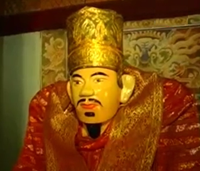
Po Klong Mah Nai, also known as Po Mah Taha under his Islamic title Maha Taha, was ruler of Panduranga from 1622 to 1627 and a key figure in seventeenth-century Panduranga-Champa history. French scholarly sources often classify him among the Muslim rulers of Champa, indicating the growing importance of Islam in the political and social institutions of the Panduranga court. He was born in Panduranga-Champa and died at Bal Canar (Parik-Panduranga), in the present-day Phan Rí-Bình Thuận area. Of Churu and Raglai origin, Po Mah Taha had no genealogical connection to the Po Klong Halau dynasty (1579-1603) (Aymonier, 1890). According to the Panduranga chronicle (Sakkarai dak rai patao), Po Klong Mah Nai ascended the throne in the Year of the Dog, abdicated in the Year of the Rabbit, ruled for six years, and ruled from a capital at Bal Canar. In Nguyen-dynasty Sino-Nom sources, his name appears as Bà Khắc-Lượng Như-Lai, a Sinicized transcription of his Cham title. |
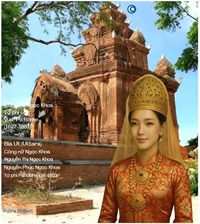
This study examines Princess Ngọc Khoa (Bia Ut) in the collective memory of the Cham community, in relation to the reign of Po Rome (1627-1651) in Panduranga. Based on the Panduranga chronicles, the Nguyễn Phước genealogies, and oral traditions from Cham Bani villages, the research highlights how the Cham community accuses Princess Ngọc Khoa of executing political schemes under the orders of Chúa Nguyễn, using her beauty and intelligence to manipulate King Po Rome, weaken the royal court, and undermine the religious and political order of Panduranga. By analyzing Bia Ut as a “political agent” under Chúa Nguyễn’s plan and as a symbol of the kingdom’s decline, the study demonstrates how the subjects of Panduranga personalized historical events, transformed them into moral symbols, and issued social warnings about foreign influence and threats to the stability of the royal order. The figure of Bia Ut both represents the political scheming of external powers and reinforces Cham cultural identity, reflecting the perspectives of Panduranga’s people on foreign interventions and the critical importance of safeguarding national order. |

Nghiên cứu phân tích Công nữ Ngọc Khoa (Bia Ut) trong ký ức cộng đồng Cham, liên quan đến triều đại Po Rome (1627-1651) ở Panduranga. Dựa trên biên niên sử Panduranga, gia phả Nguyễn Phước, và truyền thuyết dân gian tại các palei Cham Bani, nghiên cứu làm rõ cộng đồng Cham tố cáo Công nữ Ngọc Khoa là nhân vật thực hiện mưu đồ chính trị theo lệnh Chúa Nguyễn, sử dụng sắc đẹp và trí tuệ để thao túng vua Po Rome, gây suy yếu triều đình và phá hoại trật tự tín ngưỡng, chính trị của Panduranga. Qua khảo sát, Bia Ut như “nội gián” theo mưu đồ Chúa Nguyễn và Bia Ut trong biểu tượng hóa sự suy vong quốc gia, nghiên cứu chỉ ra cách thần dân Panduranga: cá nhân hóa biến cố lịch sử, biểu tượng hóa đạo lý, và cảnh báo xã hội về ảnh hưởng ngoại lai cũng như mối nguy rạn nứt trật tự triều đình. Hình tượng Bia Ut vừa thể hiện mưu đồ chính trị của ngoại tộc, vừa củng cố bản sắc văn hóa Cham, phản ánh quan điểm của thần dân Panduranga về các âm mưu can thiệp từ bên ngoài và tầm quan trọng của việc bảo vệ trật tự quốc gia. |
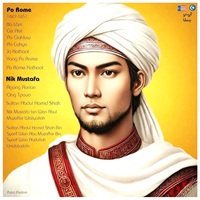
The study focuses on the life, origins, policies, and cultural and religious legacy of King Po Rome (1627-1651), one of the most prominent rulers of the Panduranga-Champa principality in the 17th century. Based on sources including the Cham chronicle Sakkarai dak rai patao, the Kelantan royal genealogy (Malaysia), diplomatic records with Đại Việt, Kelantan, Patani, and Singgora, as well as modern scholarly research on Champa and Southeast Asia, the study analyzes Po Rome as a model of cultural and religious syncretism. Po Rome is recognized as the king of Panduranga-Champa who promoted Islamization while simultaneously maintaining traditional indigenous beliefs. He established Islamic shrines in the capital Bal Pangdurang and Champa architectural works, while also preserving local ritual practices. This combination reflects a policy of religious harmony, the preservation of Cham, Churu, Raglai, and Rhade cultural identity, and the integration of Islamic elements from Kelantan and Patani, creating a unique model of a “religiously harmonious king” in Southeast Asian history. The study will clarify aspects of Po Rome’s family and lineage. Kelantan sources record that he bore the Islamic name Nik Mustafa bin Wan Abul Muzaffar Waliyullah and had three prominent sons who held leadership roles in Champa, Patani, and Singgora. Through diplomatic relations and royal marriages with Kelantan, Po Rome strengthened religious and political networks between Champa and the Malay Islamic world, while also enabling Champa to maintain independence in the face of pressures from Đại Việt and Ayutthaya. |
Cham Photos »
Cham websites »
Cham literatures »
Cham Heritage »

Cham Video »
Lễ tấu chức sư cả Cham Bani
Ramadan Cham Bani